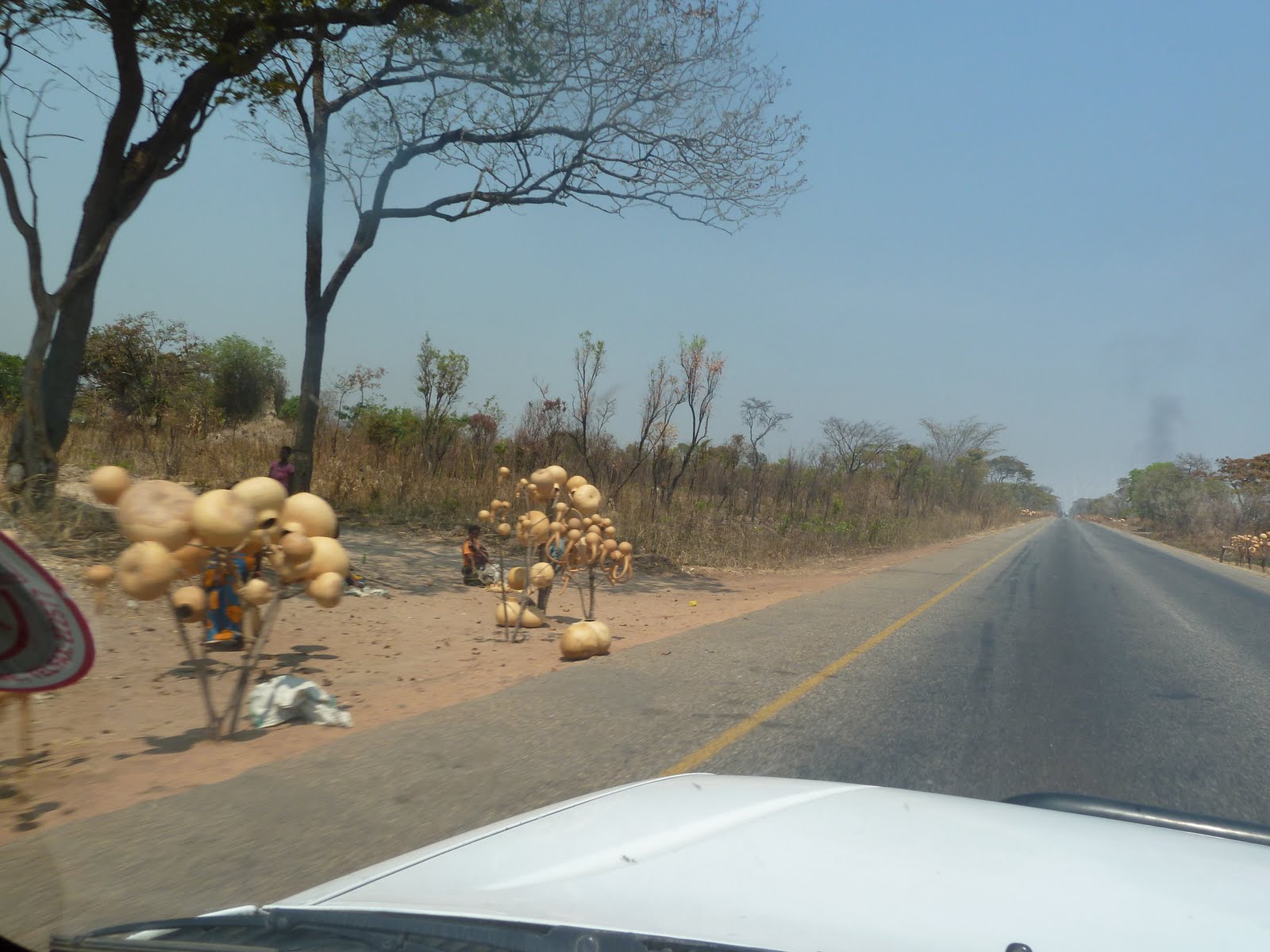
Zambia is one of the 10 poorest countries on earth. 86 percent of people throughout Zambia live below the poverty line and 50 percent are unemployed. The average annual income is US$360, with about two thirds of the population living on less than $1 a day. Only the most affluent Zambians have access to proper health care. The average life expectancy is 38 years and 182 out of every thousand children born die before age 5. Malaria remains the biggest killer of children under 5 and poses a major health problem for the rest of the population. The HIV/AIDS pandemic is widespread, with more than 1 in 7 adult Zambians infected and some 710,000 children orphaned by the disease. About 50 percent of Zambian children suffer from malnutrition.
This is the context in which Molly and I have been called to do ministry in the coming year, and speaking wisely, relevantly, and theologically to this context feels like an overwhelming task. My response to these feelings of overwhelm has been to talk to everyone I can--colleagues, neighbors, taxi drivers--about the political and economic situation here, and of course, to do what I usually do when I am insatiably curious or confused: read, read, read.

One of the best books I've read so far is The Fate of Africa, Martin Meredith's comprehensive and engagingly-written (though somewhat depressing) history of the Continent's past 50 years, stretching from the wave of African countries gaining their independence from their colonial rulers in the mid-20th century (Ghana was first in 1957; Zambia became independent in 1964) to the present. He documents the rise of what has become known as Big Man politics in Africa, characterized by one-party political systems, the autocratic rule of heads of state, minimal checks and balances by the legislature and judiciary, and tight state control of the economy. This kind of political system is hugely conducive to corruption, and many of Africa's resource-richest countries have fared worst economically due to the greed and corruption of political leaders. Even after many African countries (Zambia included) legalized opposition parties in the 1980's, most (Zambia included) have remained "Big Man democracies" in which heads of state retain unmatched power and elections are rigged so that sitting incumbents are nearly impossible to replace. Zambians have been victimized by Big Man political culture as much as any other of the Continent's peoples, with Transparency International's Corruption Perceptions Index (CPI) rating Zambia at 3 out of 10 (with 0 being most corrupt). According to some Zambians I have spoken to, the opposition PF (Patriotic Front) has been the clear winner in the last three elections, and yet the ruling MMD (Movement for Multi-Party Democracy) has remained in power.

Dambisa Moyo's Dead Aid has been another enlightening (though again, rather frustrating) read. Moyo is a Zambian economist who has worked at Goldman Sachs and the World Bank, holding a Doctorate in Economics from Oxford University and a Masters degree from Harvard. In Dead Aid, Moyo argues that developmental (as opposed to humanitarian) aid to Africa is a negative force in the life of the Continent, further promoting corruption in government and dependence in citizens. She argues for more innovative ways for Africa to finance development, including trade with China, accessing the capital markets, and microfinance. Though some Zambians I've spoken with disagree with some of her solutions (especially Chinese direct foreign investment--one person opined, only half-jokingly, that "Zambia is becoming a Chinese colony"), most seem to agree that her analysis of the deleterious effects of aid is right on.
Bottom line: Western donor countries are sending millions upon millions of dollars of aid to corrupt African governments that use those dollars not to finance development, but to line the pockets of their officials, while the vast majority of the population remains poor, sick and hungry.
So what's the theological situation? As is the case throughout the Global South, prosperity gospel theology is on the rise in Zambia. The prosperity gospel, promoted in the US by preachers like Joel Osteen and T.D. Jakes (the latter being wildly popular here), has no real political or economic analysis to speak of, but posits that poverty and deprivation are primarily the result of unfaithfulness. If you're not being "blessed"--by health and wealth--it's because you're not faithful enough. The prosperity gospel is a grossly simplistic matter of personal "faith" or the lack thereof: if you're faithful, God will bless you. If you're not--well, He won't. Such theology fails to notice, apparently, the life and example of its Lord, who remained a homeless wanderer throughout his life and died a political prisoner executed by the State.
Why, then, is such thinking so popular throughout the Global South? Likely because, theologically dubious though it is, it offers hope of better days to come for some of the world's most materially deprived people. Such hope is not easily come by in places like Zambia. I am keenly aware, therefore, that if I reject prosperity gospel theology in my preaching and teaching here, I must be able to articulate some other legitimate Christian hope that makes sense in this context.
In my teaching, preaching, and theologizing in the States, I most often identified the Reign of God as the legitimate object of Christian hope, visible in provisional form in God's people, the Church. I placed my hope in God's capacity through the power of the Holy Spirit to form the Church into a true foretaste of his coming Reign; into a people who live in right, just and loving relationship to one another, their fellow creatures, and all of God's creation; into a people who really see one another, take care of one another, and bear one another's burdens, into a people capable of laughing, rejoicing, weeping, worshiping, praying and breaking bread together.
What I don't yet know is what that [i.e. the Church as foretaste of the Reign of God] looks like in the Zambian context, and how God is at work to make it real. That, I suppose, is the object of my theological quest these days: how are my Zambian friends, neighbors, and fellow Jesus-followers showing me the Reign of God as it takes shape in Zambia, and how in God's name can I point to it, lift it up, and offer it back to my Zambian friends, neighbors, and fellow Jesus-followers as the object of real, legitimate, Christian hope?
In my teaching, preaching, and theologizing in the States, I most often identified the Reign of God as the legitimate object of Christian hope, visible in provisional form in God's people, the Church. I placed my hope in God's capacity through the power of the Holy Spirit to form the Church into a true foretaste of his coming Reign; into a people who live in right, just and loving relationship to one another, their fellow creatures, and all of God's creation; into a people who really see one another, take care of one another, and bear one another's burdens, into a people capable of laughing, rejoicing, weeping, worshiping, praying and breaking bread together.
What I don't yet know is what that [i.e. the Church as foretaste of the Reign of God] looks like in the Zambian context, and how God is at work to make it real. That, I suppose, is the object of my theological quest these days: how are my Zambian friends, neighbors, and fellow Jesus-followers showing me the Reign of God as it takes shape in Zambia, and how in God's name can I point to it, lift it up, and offer it back to my Zambian friends, neighbors, and fellow Jesus-followers as the object of real, legitimate, Christian hope?